
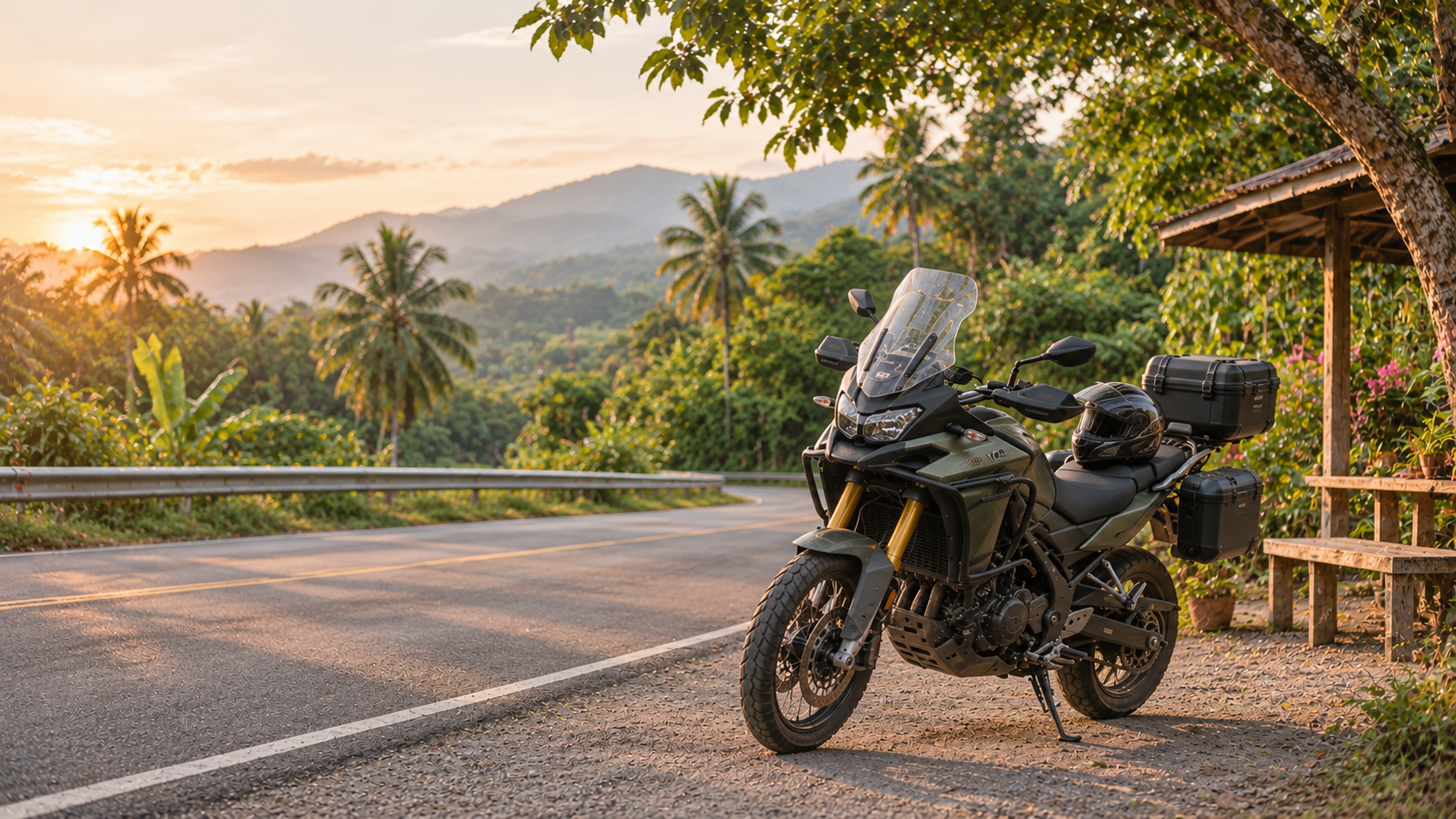
What to Do After an Accident on a Rental Bike in Thailand
Most riders never need this page. Still, knowing what to do is a quiet kind of confidence, and it takes only a few minutes to read.
We’ve put together the simple steps we would want to know ourselves. Read them once before your trip, save a few numbers on your phone, and then enjoy the ride. If something does happen, you’ll already have a plan, and you’ll have us.
In short: stay safe, call us, and take your time.
If anyone is hurt, call 1669 or 191, or the English-speaking Tourist Police on 1155. Then call us.
Take photos, stay friendly, and please wait for our help before signing or settling anything.
We help with negotiation, translation and legal support if needed, and we’ll work with you toward a fair solution, even if the accident was your fault.
Three things to remember
- Stay safe. Everything else can wait.
- Call us. We’ll guide you from the first minute.
- Take your time. There’s no need to decide, pay or sign anything quickly.
Ten gentle steps
1. Pause, stay safe and stay nearby
Take a breath. If it’s safe, switch on your hazard lights and move out of traffic. Thai rules ask drivers to stay at the scene, help where they can and share their details, and staying nearby also makes everything simpler for you. Even if you feel shaken, you’re doing the right thing by staying.
2. Look after people first
If anyone is hurt, call 1669 for an ambulance or 191 for police. The Tourist Police on 1155 can help in English. In a life-threatening emergency, Thai hospitals are expected to stabilise a patient first and deal with payment afterwards, so please don’t hold back from getting care. For visitors, the hospital bill is usually settled later through travel insurance, which is why we suggest calling your insurer soon after (see step 7).
3. Call us
Once everyone is safe, call or message us. Tell us where you are, what happened and whether anyone needs help. We’ll take it from there with you.
4. Take photos and video
If it’s comfortable, record the scene: the vehicles, the road, the number plates and any damage. If another person is involved, a photo of both sides of their licence and their plate is helpful. A dashcam or nearby CCTV can help too. Our handover photos of your bike also show how it looked when it left us .
Our Pickup Day Checklist shows how we photograph the bike at handover, and how you can do the same.
5. Keep things friendly
A calm, polite manner makes every step smoother, from the roadside to the police station. If the police ask for a routine alcohol breath test, cooperating calmly keeps things moving.
6. Police: a report often helps
Calling the police or Tourist Police is usually a good idea. A police record is often helpful:
- When someone is injured.
- When it’s unclear what happened.
- When the other party leaves.
- When you want to claim medical costs from the government insurance.
Thai police offer two kinds of record:
- A daily record documents what happened.
- A criminal complaint starts legal action.
We’ll help you understand which one fits.
The report will be in Thai, so we’ll gladly help translate it. Please ask for a copy for your insurer and your own records.
7. At the hospital: treatment comes first, paperwork second
In an emergency you’ll be treated first. Afterwards, private hospitals usually ask for either a deposit or a guarantee of payment letter from your insurer. The easiest route is to call your insurer’s 24-hour line early, ideally from the hospital, so they can arrange it directly.
Some hospital may ask for a deposit if no guarantee letter arrives within 48 hours. Please keep every receipt, report and medical certificate, and photograph each one.
If you’d like to understand how your travel insurance and the government insurance fit together before you ride, our simple guide to insurance on a rental big bike explains it.
8. Take a pause before paying or signing
If someone asks you to pay cash or sign a document at the scene, especially one in Thai, it’s perfectly fine to say, “I’d like some help first,” and call us or call 1155. Roadside figures can be far from real repair costs, and informal payments leave no record. A good agreement is written, states the amount and is fully understood before anyone signs. We’ll help negotiate it for you.
9. Keep your records together
At booking you choose how to leave your deposit: the full amount, or, if you prefer, your passport with us instead. We store it safely and return it when you return the bike. If you need it sooner, for the police, a hospital, your hotel or your embassy, please tell us and we’ll arrange it straight away.
We recommend keeping a photo of your passport on your phone too, and a folder with photos, police papers, hospital receipts and messages. A tidy record makes every conversation easier.
10. Leave the bike to us
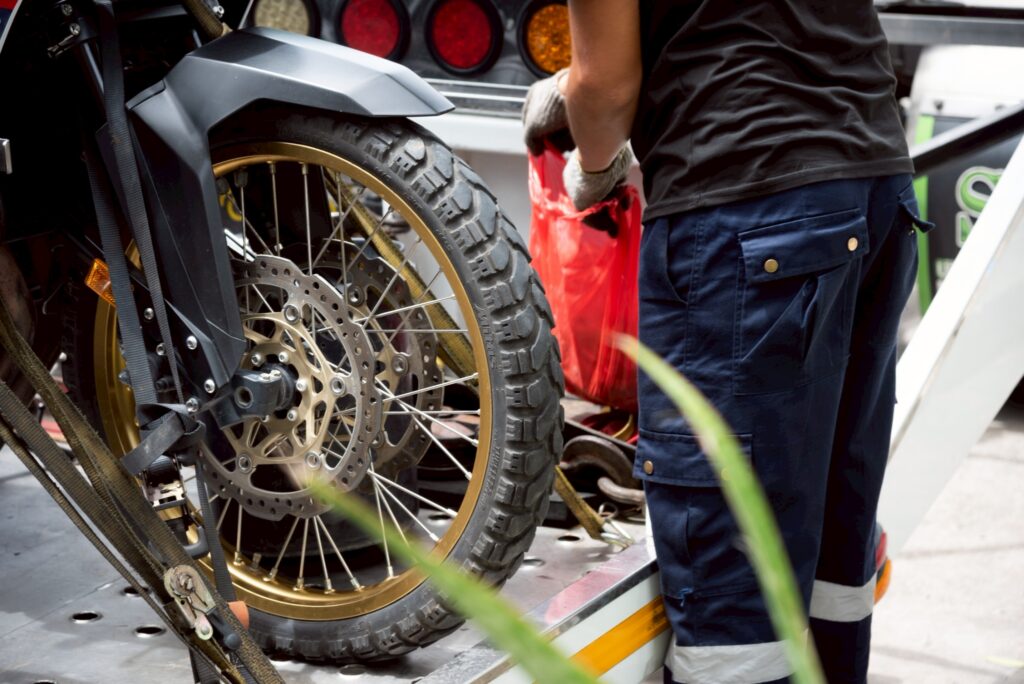
Please let us know before arranging repairs or discussing bike costs with anyone. We have our own steps for assessing the bike and arranging recovery.
If the accident was your fault
It can happen to anyone, and you’re not on your own. Please still stay nearby, stay friendly and call us.
We help in three ways:
- Negotiation. We speak with the other party and work with you toward a fair solution for everyone.
- Translation. We help with language at the roadside, the police station and the hospital, and with paperwork.
- Legal support if required. We can go with you to the police station or to court when it’s necessary, or help you find a lawyer. We’re a rental team, not a law firm, so for legal advice we’ll help you find a qualified lawyer.
We can’t promise a particular outcome, but we promise to be with you through it.
If it’s something smaller
A flat tyre, a gentle fall or a bike that won’t start can happen on any trip. Please call us, tell us where you are and we’ll guide you.
Riding in a group?
It helps to choose one person to speak with the police and with us, while the others stay safe and clear of the road. Everyone can keep the help card on their phone, so nobody has to look up numbers.
The best help is a smooth ride in the first place, so you may also enjoy our guides to riding safely in Thailand and what to expect on Thai roads.
*This guide is general information, not legal or insurance advice.
FAQs
What should I do first after an accident on a rental motorcycle in Thailand?
Stay safe and nearby. Call 1669 or 191 if anyone is hurt, then call us. Take photos and keep things friendly.
Do I need a police report?
Often it helps: when someone is injured, when it’s unclear what happened, when the other party leaves, or to claim from the government insurance. Call 1155 or 191, and we’ll help.
What if the other driver leaves?
If you can, photograph their plate and note what you remember, then report it to the nearest police station. A dashcam or nearby CCTV may help.
What help do you give if something goes wrong?
We help with negotiation, translation and legal support if required, including going with you to the police station or court when necessary, or helping you find a lawyer.